Bookkeeping for sole traders in Ireland – from receipts to Form 11 figures
If you are self-employed, the tax return is only as good as the records behind it. The workbook keeps sales and expenses through the year, reconciles them with the bank every month and, at the end, sorts the totals into the Form 11 extracts from accounts with an estimate of the tax to come.
- 400 invoices and 600 expense receipts
- 35 expense categories linked to Form 11 lines
- Bank reconciliation for 12 months
- Estimate of income tax, USC and Class S PRSI
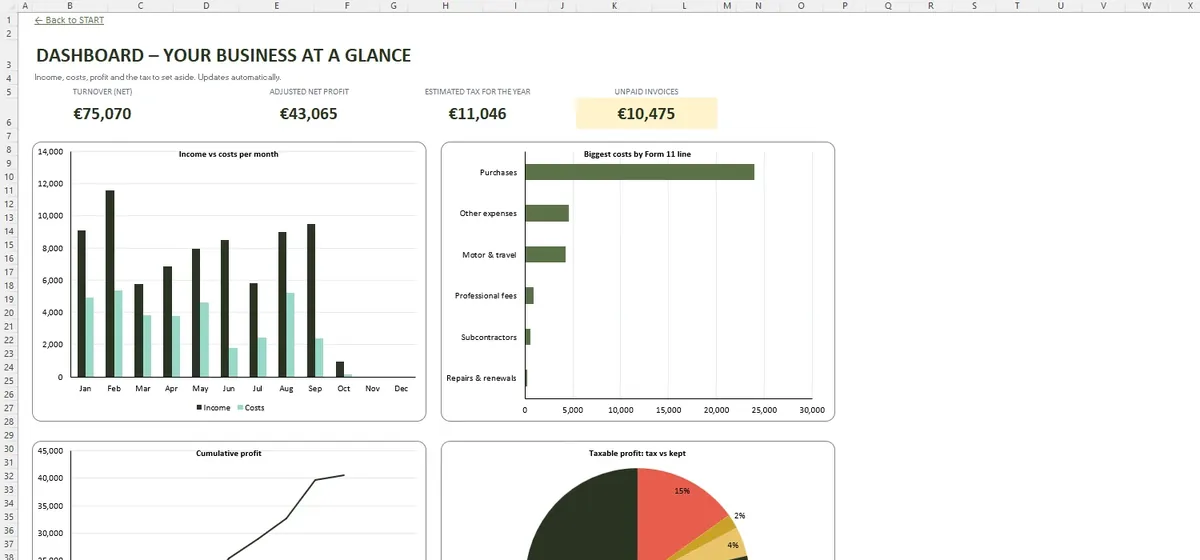
Through the year
- INCOME: invoices and credit notes with VAT, payments received and days overdue
- EXPENSES: supplier, category, paid from, VAT to reclaim and business-use share
- BANK REC: opening and closing balances, drawings and items not yet cleared
- VAT: the T1–T4 boxes for every two-month VAT3 period, invoice or cash basis
Screenshots from the file
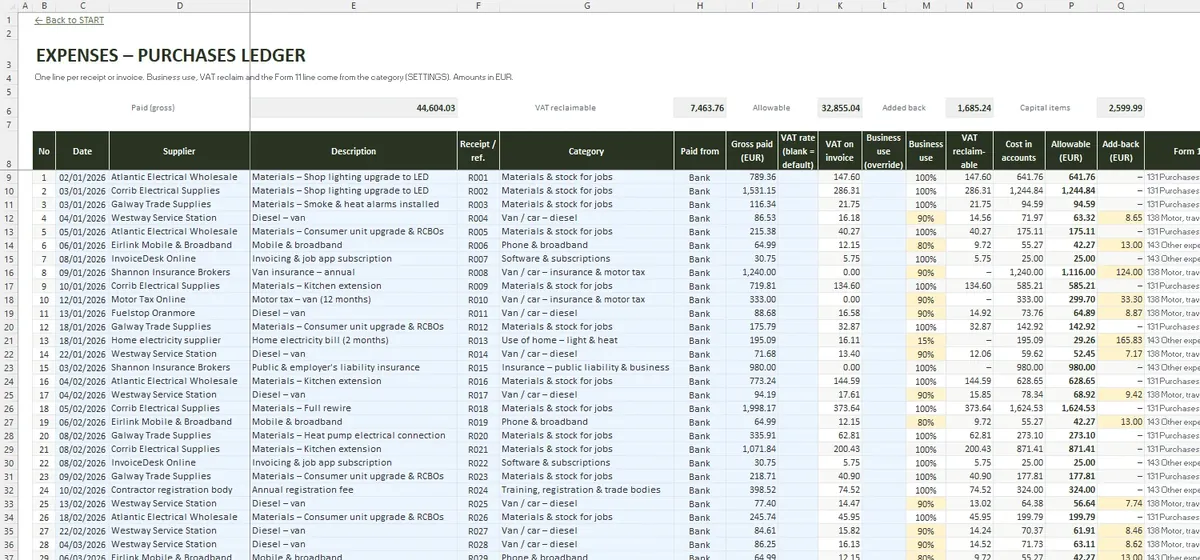
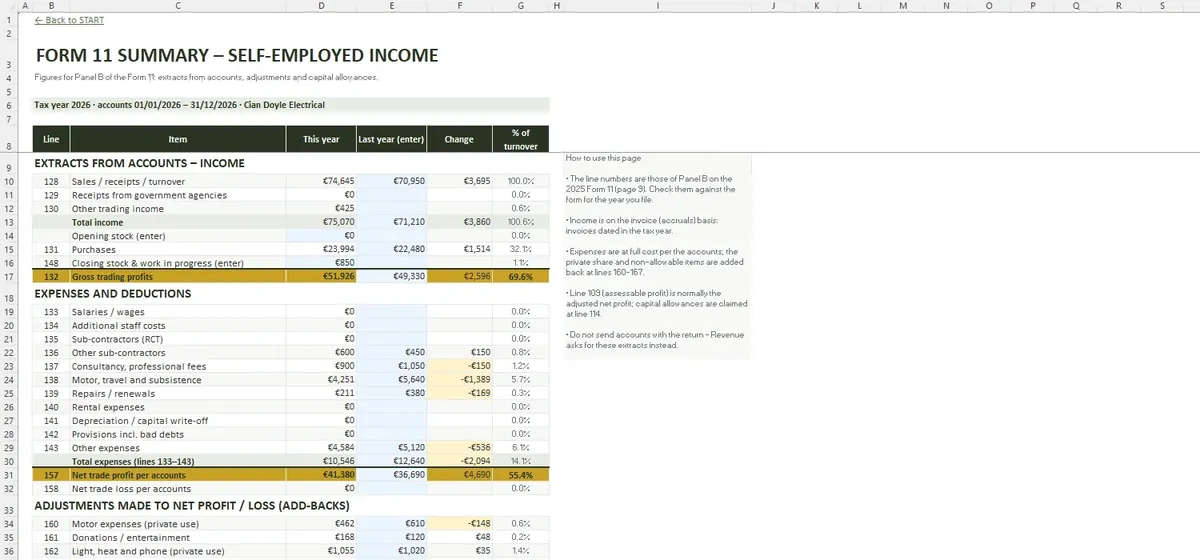
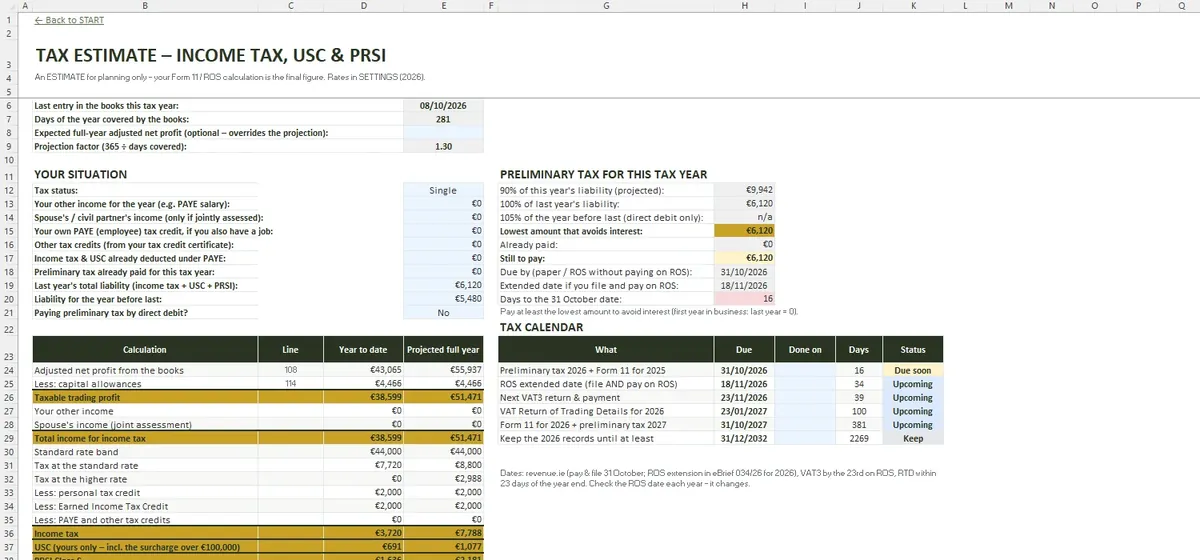
At the year end
FORM 11 SUMMARY places the totals in the extracts from accounts, adds back private use and swaps depreciation for the capital allowances worked out in CAPITAL ALLOWANCES. TAX ESTIMATE then puts a figure on income tax, USC and Class S PRSI, for the year to date and for the full year, with the preliminary tax options.
A VAT threshold monitor
If you are not VAT registered, the VAT tab keeps a running total of turnover so you can see when you are getting close to the registration threshold. The 2026 rates, bands and thresholds are editable.
Technical details
- START
- SETTINGS
- INCOME
- EXPENSES
- BANK REC
- VAT
- CAPITAL ALLOWANCES
- FORM 11 SUMMARY
- TAX ESTIMATE
- DASHBOARD
- File format
- .xlsx
- Tabs
- 10
- Capacity
- 400 invoices · 600 expenses · 35 expense categories · 25 assets · 12 months bank reconciliation
- Requires
- Excel 2016+ / Microsoft 365
- Macros
- None