Preventive maintenance schedule – 52-week plan, work orders and reliability
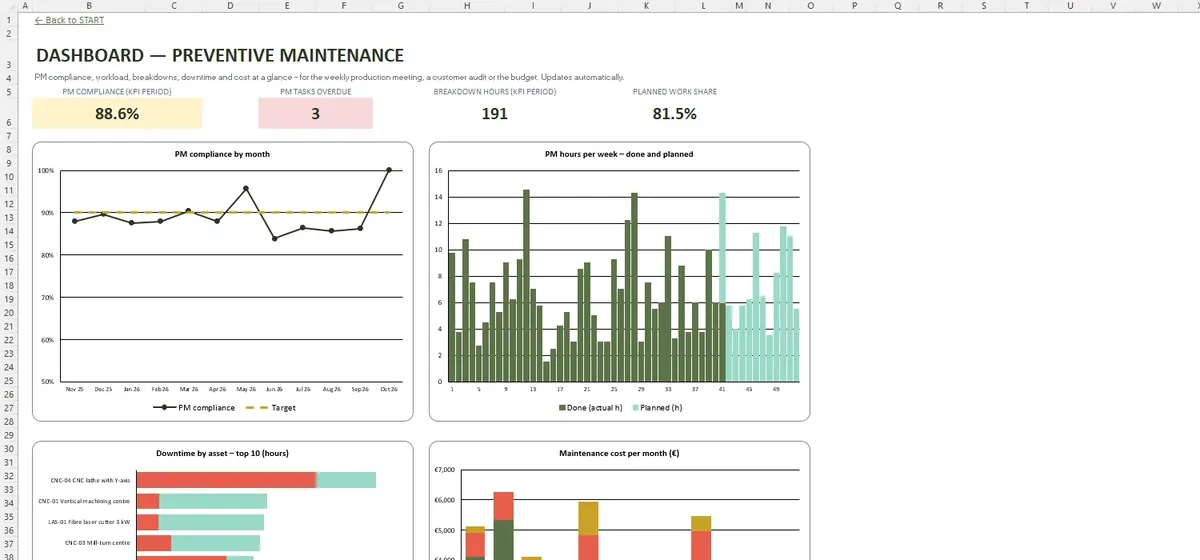
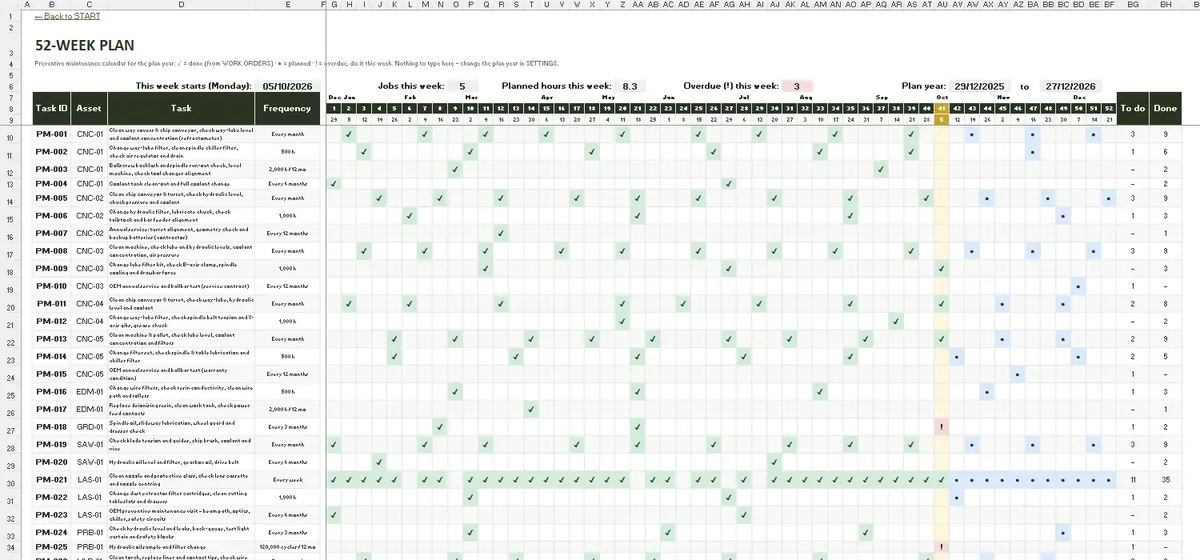
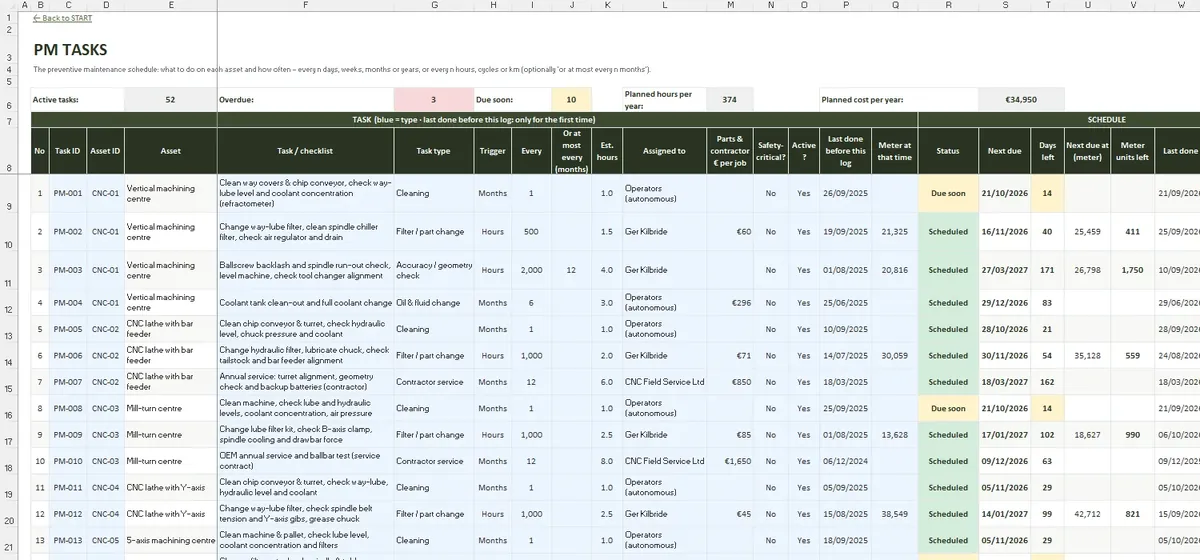
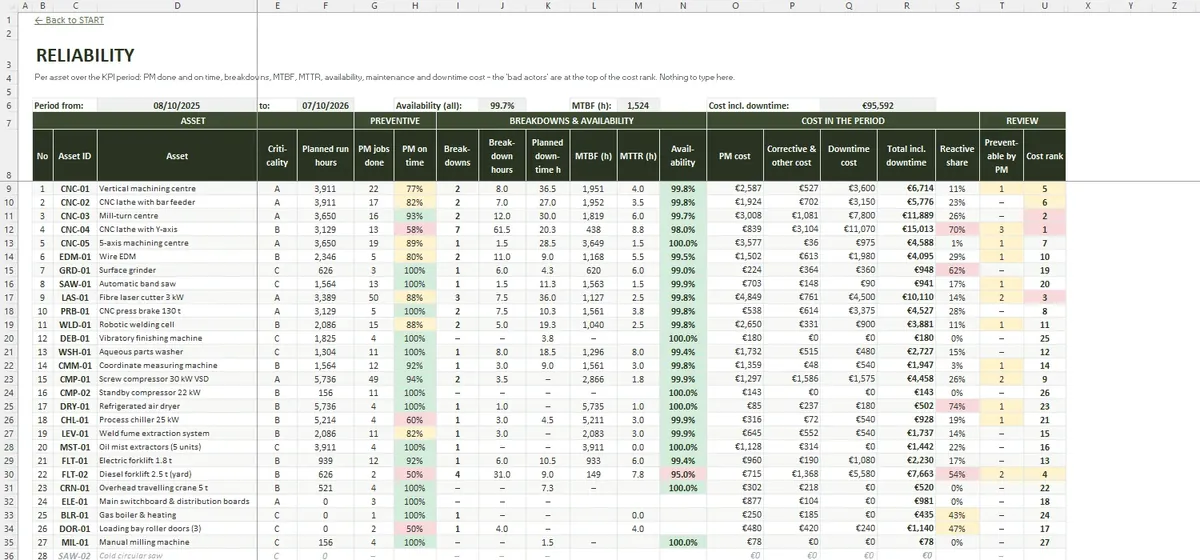
Some tasks are due every month, others every 500 running hours, and some at whichever comes first. The schedule handles all three, builds a 52-week plan from the work orders and ranks the assets that break down most, so the maintenance team knows where its hours are going.
- 80 assets and 200 PM tasks
- Intervals by date, hours, cycles or km
- 1,200 work orders with downtime and cost
- 150 spare parts with stock levels
Meter readings that forecast the due date
For a task triggered by hours, cycles or km, METER READINGS takes regular readings from the hour meter, stroke counter or odometer. The workbook works out the use per day and forecasts when the task will fall due, with a maximum number of months as a backstop.
What is in the file
- START
- SETTINGS
- ASSETS
- PM TASKS
- 52-WEEK PLAN
- WORK ORDERS
- METER READINGS
- SPARE PARTS
- RELIABILITY
- DASHBOARD
- File format
- .xlsx
- Tabs
- 10
- Capacity
- 80 assets · 200 PM tasks · 1,200 work orders · 1,500 meter readings · 150 spare parts
- Requires
- Excel 2016+ / Microsoft 365
- Macros
- None
The 52-week plan
- ✓ for work done, taken from the work orders
- ● for planned tasks
- ! for overdue tasks
- Planned hours per week to balance the workload
The plan year starts on the date you set in SETTINGS.
Inside the workbook
Questions and answers
How is PM compliance calculated?
Where do I begin?
Does it cover statutory inspections?
Reliability per asset
RELIABILITY shows for each asset the PM jobs done and on time, PM compliance, breakdowns, MTBF, MTTR, availability and cost, and ranks the worst performers. WORK ORDERS records labour, parts, contractor cost and downtime for PM, breakdowns and corrective jobs.